| Keynote Speaker Ⅰ |

Prof. Hongwei Li
University of Electronic Science and Technology of China, China
IEEE Fellow
Biography: Hongwei Li is the Director of the Center for Faculty Development at the University of Electronic Science and Technology of China. He is an IEEE Fellow (2024), a Distinguished Professor of the National Major Talent Project (2019), a member of the expert group for a major special project under the Ministry of Science and Technology's (MOST) 15th Five-Year Plan, and the group leader for the "Cyberspace Data Governance" direction of the MOST 14th Five-Year Plan key special project on "Cyberspace Security Governance." Additionally, he serves as the Director of the National Discipline Innovation and Talent Introduction Base for Data Security Governance, Chair of the Communication and Information Security Technical Committee under the IEEE Communications Society, and an IEEE Vehicular Technology Society Distinguished Lecturer.
His research interests focus on data security and artificial intelligence security. He has published 85 papers in JCR-1 journals and CCF-A conferences. He is the recipient of several prestigious awards, including the 2025 IEEE Signal Processing Society Best Paper Award, the ACM CCS 2025 Distinguished Paper Award, the First Prize of the 2019 National Science and Technology Progress Award, the First Prize of the 2021 Wu Wenjun AI Science and Technology Progress Award, and the Second Prize of the 2021 Natural Science Award from the Chinese Institute of Electronics.
Speech Title: The Current State and Future Prospects of Agent Security
Abstract: Agents are currently experiencing widespread adoption. However, numerous security challenges remain during their practical application. This talk will analyze the current security landscape of agents from multiple dimensions, including their practical significance, existing challenges, and our team's research foundation, while also outlining future development trends.
| Keynote Speaker Ⅱ |

Prof. Chao Shen
Xi'an Jiaotong University, China
IEEE Fellow
Biography: Chao Shen, IEEE Fellow, Chair Professor of Xi'an Jiaotong University, Cheung Kong Scholar Professor, Head of the National Natural Science Foundation of China Innovation Group, Head of the Ministry of Education Innovation Team, Director of the Ministry of Education Key Laboratory, Recipient of the Science Exploration Award, DAMO Academy Young Orange Award, MIT TR35 China, and IEEE SMC Early Career Award, Chief Scientist of the National Key Research and Development Program of China, and Chair of the IEEE Trustworthy and Controllable Intelligent Systems Technical Committee.
Speech Title: Data-Intelligence Chain Security: From Small Models to Large Models to Embodied Intelligence
Abstract: Data-driven intelligent systems, through the integration of advanced sensing methods, control algorithms, decision-making technologies, and artificial intelligence, have evolved from small models to large models to embodied intelligence. As these systems have become increasingly sophisticated, their security challenges have expanded beyond traditional network and system levels to encompass the entire chain of data, models, algorithms, and applications. Ensuring the security of artificial intelligence has become a core challenge in the design, development, and deployment of intelligent systems. This report systematically reviews research progress in the field of artificial intelligence security. Focusing on security dimensions such as confidentiality, integrity, and privacy, and starting from the component structure of the intelligent supply chain, it introduces the team's research and practices in the areas of intrinsic and extrinsic security within the intelligent supply chain.
| Keynote Speaker Ⅲ |
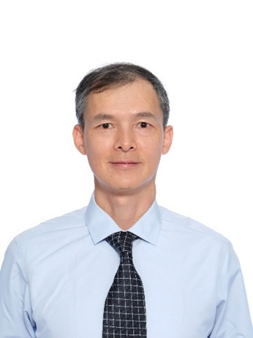
Prof. Bin Xiao
The Hong Kong Polytechnic University, China
IEEE Fellow
Biography: Dr. Bin Xiao is a professor at the Department of Computing, the Hong Kong Polytechnic University, Hong Kong. Prof. Xiao received the B.Sc and M.Sc degrees in Electronics Engineering from Fudan University, China, and a Ph.D. degree in computer science from the University of Texas at Dallas, USA. His research interests include AI security, data privacy, Web3, and blockchain systems.
He is currently an Associate Editor of the IEEE Transactions on Information Forensics and Security (TIFS) and IEEE Transactions on Cloud Computing (TCC). He has been the associate editor of the IEEE Internet of Things Journal, IEEE Transactions on Network Science and Engineering, and Elsevier Journal of Parallel and Distributed Computing. He is the IEEE Fellow, and has been the IEEE ComSoc Distinguished Lecturer, and the chair of the IEEE ComSoc CISTC committee from 2024 to 2025. He has been the program co-chair of IEEE CNS2025, track co-chair of IEEE ICDCS2026, ICDCS2022, the symposium track co-chair of IEEE Globecom 2024, ICC2020, ICC 2018, and Globecom 2017, and the general chair of IEEE SECON 2018.
Speech Title: Jailbreaking and Knowledge Poisoning Attacks on AI Agents
Abstract: AI agents increasingly combine large language models (LLMs), multimodal perception, and retrieval-augmented generation (RAG) to support complex reasoning and decision-making. However, these modular architectures introduce new security risks beyond traditional model-level vulnerabilities. In this talk, we examine two emerging attack surfaces in AI agents: jailbreaking the agent’s reasoning core and poisoning its external knowledge memory.
First, we present video-driven jailbreaking attacks on multimodal LLMs, showing that safety alignment is weaker in the video modality. By constructing safety-proximal typographic videos with diverse frames, attackers can bypass safety defenses more effectively than image-based methods. Second, we analyze black-box knowledge poisoning attacks on retrieval-augmented diffusion models, where adversaries inject malicious embeddings into the knowledge base and jointly optimize triggers to manipulate both retrieval and generation. These works reveal that AI agents are vulnerable at the representation and memory levels, highlighting the need for principled defenses in multimodal and retrieval-augmented systems.